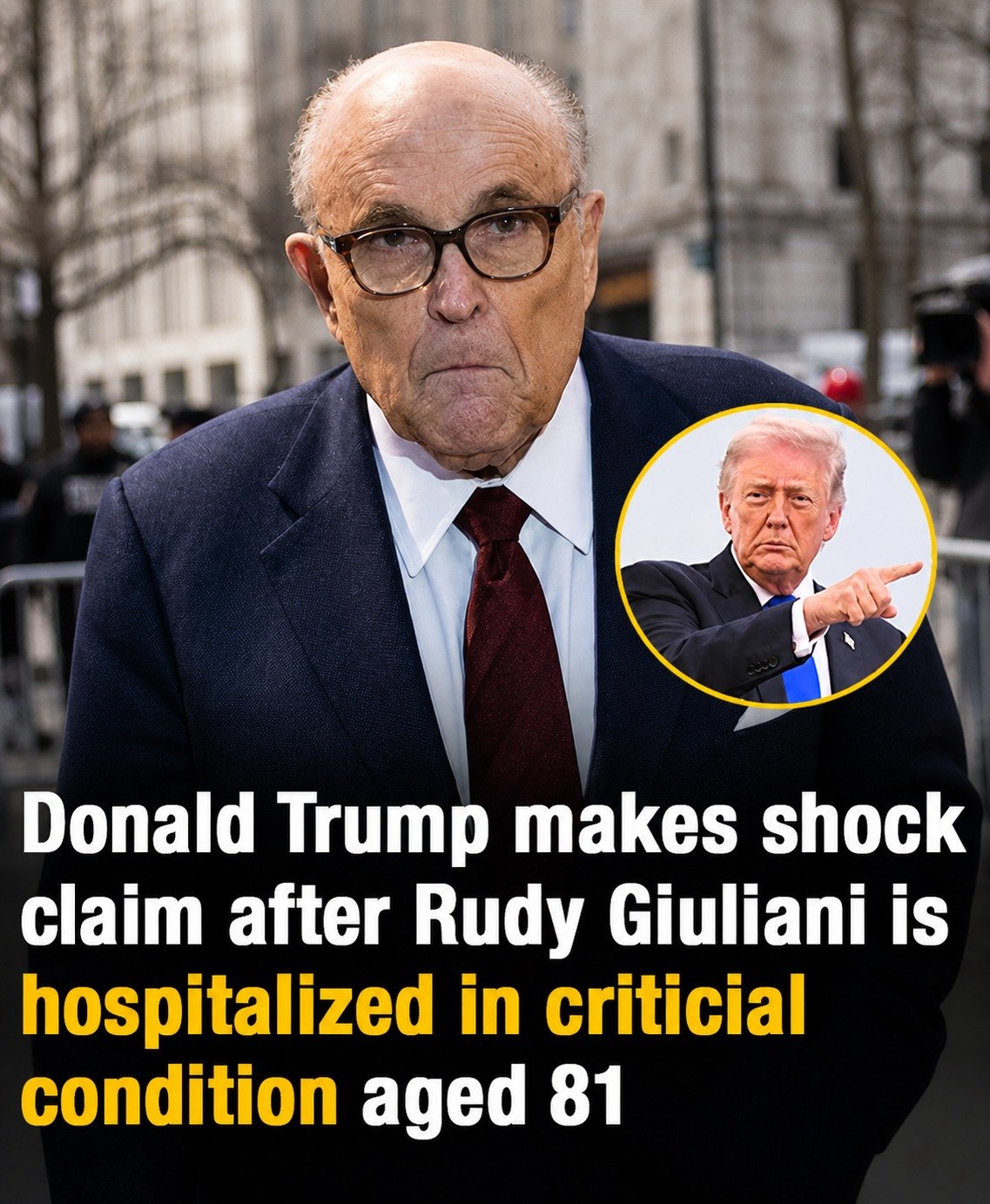
The sudden hospitalization of Rudy Giuliani has drawn widespread attention, prompting concern across political and public circles in the United States. Known for his long and often polarizing career, his current medical situation has shifted the focus away from politics and toward his health and well-being.
According to available reports, Giuliani was admitted to a hospital in serious condition, though specific medical details have not been publicly confirmed. At this time, healthcare providers and family members have chosen to keep updates limited, emphasizing privacy during what appears to be a sensitive moment.
Public reaction has been mixed but largely respectful, with many expressing hopes for his recovery. As a public figure for decades, Giuliani has remained a recognizable name, from his time leading New York City through challenging periods to his later involvement in national political discussions.
Former U.S. President Donald Trump also shared a message addressing Giuliani’s condition. In his statement, Trump highlighted their long-standing relationship and described Giuliani as a dedicated public servant. His remarks, while supportive, also referenced broader political tensions, reflecting the ongoing divisions that often shape public discourse.
Despite the surrounding commentary, the situation ultimately centers on Rudy Giuliani as an individual facing a serious health challenge. At 81 years old, moments like this often bring attention back to personal health, family, and the realities that extend beyond public roles or political identity.
As updates remain limited, the focus continues to be on his condition and potential recovery. For many observers, this moment serves as a reminder that behind public figures are human lives, where health and family take precedence over headlines and debate.