The Hidden Gospel: Ethiopia’s Ancient Bible and the Lost Cosmic Story of Christ
For most of the world, the Bible is a fixed and familiar collection of sacred texts.
Whether Protestant or Catholic, its structure appears settled—66 or 73 books that define the life, teachings, and divinity of Jesus Christ.
But beyond the boundaries of Western Christianity exists a far older and far broader tradition—one preserved for over 1,500 years in the highlands of Ethiopia.
This is the Ethiopian Bible, a vast and largely overlooked canon that contains not just the familiar scriptures, but additional texts that radically expand the story of faith, angels, and even Christ himself.
Ethiopia is not simply one of the oldest Christian nations in Africa—it is among the oldest in the world.

As early as the 4th century, under King Ezana of the Aksumite Empire, Christianity became the state religion—decades before the Roman Empire officially adopted it.
While Europe was still divided between pagan traditions and emerging Christianity, Ethiopia was already building churches, translating scripture, and shaping its own spiritual identity.
At the heart of this identity lies a unique biblical canon.
The Ethiopian Orthodox Tewahedo Church recognizes up to 81 books—far more than Western traditions.
Included among these are texts like the Book of Enoch, the Book of Jubilees, and the Ascension of Isaiah—works that were once known to early Christians but later excluded from mainstream doctrine.

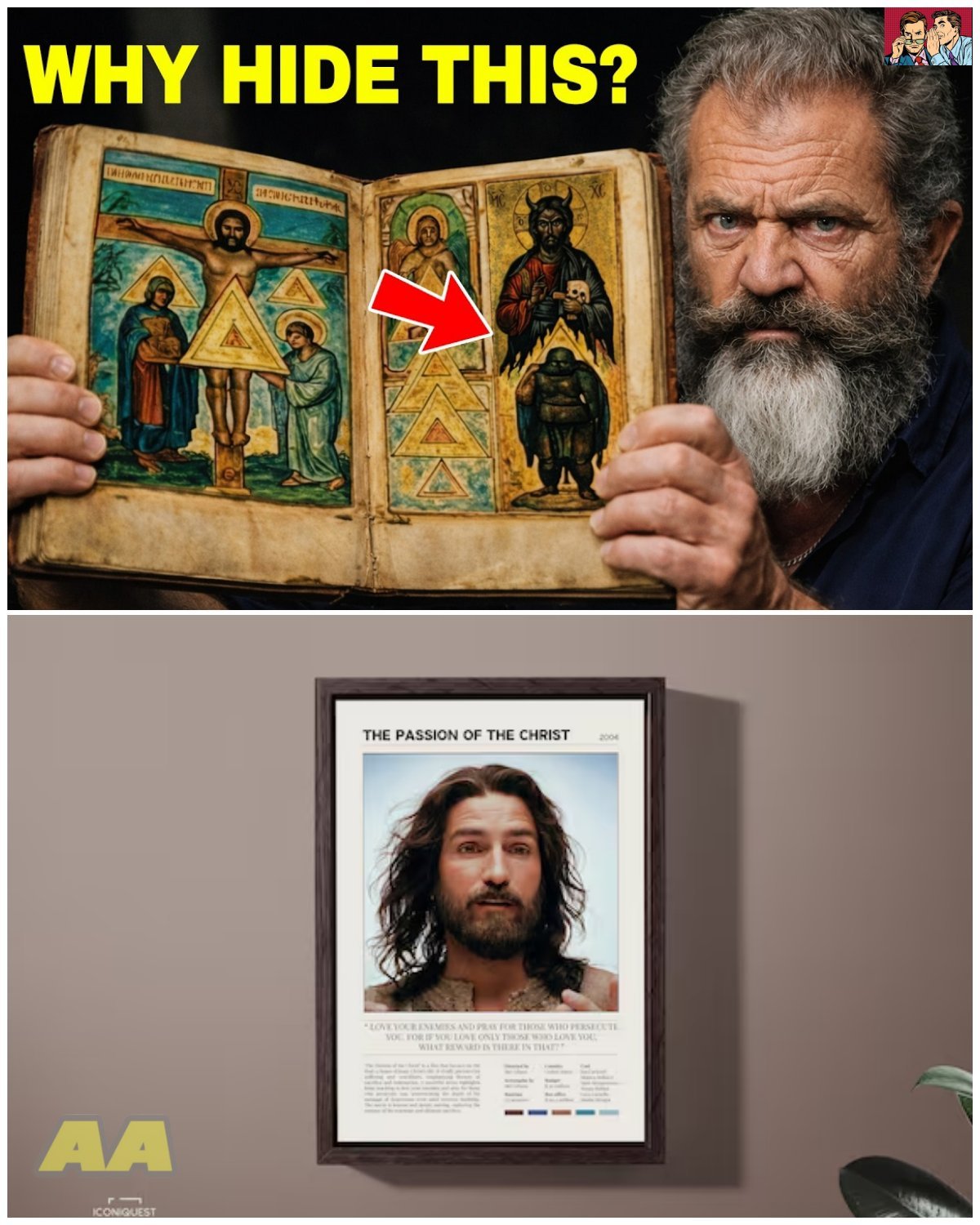
Perhaps the most extraordinary physical evidence of this tradition is the Garima Gospels—ancient manuscripts believed to date as early as the 4th to 7th centuries.
Written in Ge’ez, an ancient Semitic language, these texts are considered the oldest surviving illustrated Christian manuscripts in the world.
Their pages, bindings, and vibrant colors have endured centuries of conflict, invasion, and isolation.
But what truly sets the Ethiopian Bible apart is not just its age—it is its content.
Among its most controversial texts is the Book of Enoch.
In the standard Bible, Enoch is a mysterious figure who “walked with God” and vanished without explanation.
But in this expanded account, his story unfolds into a sweeping cosmic journey.
Enoch is taken through the heavens, shown the structure of the universe, and introduced to divine mysteries that few humans were ever meant to see.
Most strikingly, Enoch describes the “Watchers”—fallen angels who descended to Earth, mingled with humanity, and produced a race of giants known as the Nephilim.
These beings, along with the forbidden knowledge they brought, are said to have contributed to the that led to the great flood.
Fragments of this very text were later discovered among the Dead Sea Scrolls, confirming that it was widely known in ancient Jewish and early Christian communities.
Even the New Testament contains echoes of its influence—most notably in the Book of Jude, which directly quotes from Enoch.
So why was it removed?
As Christianity evolved into an organized institution, church councils gradually narrowed the biblical canon.
Texts that did not align with emerging theological frameworks—or that introduced complex cosmologies and direct access to divine knowledge—were set aside.
The Book of Enoch, with its vivid descriptions of heaven, angels, and cosmic order, may have been seen as too expansive, too mystical, or even too dangerous.
Yet in Ethiopia, none of this happened.
Geographical isolation played a crucial role.
After the rise of Islam in the 7th century, Ethiopia became largely cut off from the rest of the Christian world.
While Europe debated doctrine and standardized scripture, Ethiopian monks continued copying and preserving every text they had inherited—unchanged, uninterrupted, and deeply revered.
Inside remote monasteries carved into cliffs and mountains, generations of scribes painstakingly reproduced these manuscripts by hand.
Each page, written on goatskin parchment with hand-mixed ink, was treated as sacred.
These were not artifacts—they were living scripture, read aloud in rituals, believed to carry spiritual power, and guarded through centuries of war and upheaval.
This preservation has left us with a remarkable possibility: that the Ethiopian Bible may reflect an earlier, more expansive form of Christianity—one that embraces a cosmic vision of Christ far beyond the familiar narratives.
In texts like the Ascension of Isaiah, Christ is not only a teacher or healer, but a transcendent figure moving through multiple layers of heaven, concealing and revealing his divine nature as he descends to Earth and ascends again in glory.
This portrayal aligns closely with apocalyptic traditions and suggests that early Christians may have understood Jesus in far more mystical and universal terms.
Interestingly, this broader vision is now re-emerging in modern culture.
Filmmaker Mel Gibson, known for The Passion of the Christ, has hinted that his upcoming projects will explore themes such as fallen angels, spiritual realms, and cosmic battles—concepts that closely mirror those found in the Ethiopian canon and apocalyptic literature.
Whether intentional or coincidental, the overlap is striking.
Ancient ideas once confined to isolated monasteries are now resurfacing on a global stage, prompting renewed interest in texts long forgotten by the Western world.
And with that resurgence comes an unsettling question.
Were these writings lost simply through history’s natural evolution—or were they deliberately excluded to shape a more controlled narrative of faith?
The answer may never be fully known.
But one thing is certain: in the mountains of Ethiopia, monks have preserved a version of Christianity that refuses to be simplified—a version where the story of Jesus is not just earthly, but cosmic… not just historical, but eternal.
And as the world begins to rediscover these ancient texts, it may also begin to realize that what we thought was the complete story… was only the beginning.