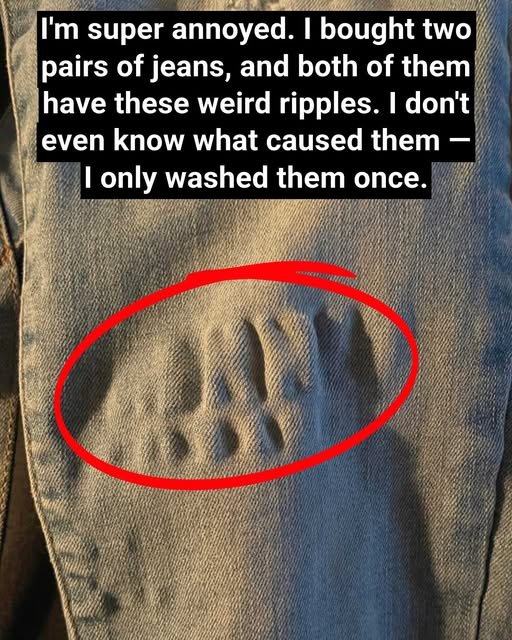
There’s nothing worse than pulling your favorite jeans out of the wash and noticing they don’t look the same anymore. Instead of that clean, smooth fit you love, you’re left with weird ripples, puckering, or uneven texture. It can feel like your jeans have completely changed shape overnight.
So what’s actually going on—and how can you prevent it?
Most modern jeans aren’t just made from cotton anymore. They often include stretch materials like elastane or Lycra, which make them more comfortable and form-fitting. But while these fibers improve flexibility, they’re also more sensitive to heat and stress.
1. Heat Damages Stretch Fibers
High temperatures—especially in dryers—are one of the biggest causes of rippling. Heat weakens the elastic fibers, causing them to lose their ability to bounce back. When that happens, the cotton and stretch materials stop working together evenly, leading to a wavy or puckered look.
2. Uneven Fabric Tension
Cotton tends to shrink consistently, but stretch fibers don’t. When they break down unevenly, some areas of the jeans tighten while others stay loose. That imbalance creates visible ripples across the fabric.
3. Washing Too Often
Frequent washing wears down both cotton and elastic fibers over time. The more cycles your jeans go through, the more stress they endure—making distortion more likely.
4. Rough Washer Movement
Washing machines twist, spin, and agitate clothing. If your jeans get tangled or compressed—especially in a full load—they can stretch in odd directions and dry that way.
5. Water Absorption
Denim absorbs water unevenly. Some parts get heavier and expand more than others. As they dry, those ar