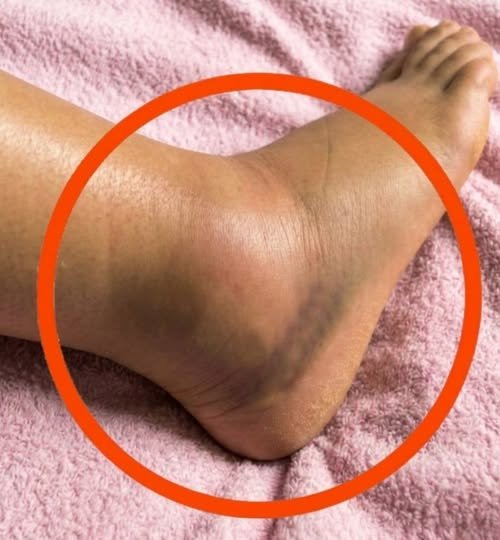
If You Notice Your Legs Are Swollen, Doctors Warn It Could Be a Sign of a Serious Underlying Condition That Many People Overlook Until It Becomes Dangerous. What Seems Like a Simple Change in Your Body May Actually Be Linked to Circulation Problems, Fluid Retention, or Other Health Issues That Should Never Be Ignored Without Proper Medical Attention Immediately

Swollen legs in older adults are often linked to natural changes in the body, but they can also signal underlying health issues that shouldn’t be ignored. As people age, circulation, kidney function, and lymphatic drainage may become less efficient, making fluid buildup more likely—especially in the lower legs where gravity has the greatest effect.

One common cause is poor circulation. Blood vessels lose elasticity over time, and the calf muscles—often called the “second heart”—may not pump blood upward as effectively when activity decreases. This can lead to fluid pooling in the ankles and feet, especially after long periods of sitting or standing.

Another major factor is fluid retention (edema), which can occur when the heart, kidneys, or liver are not functioning optimally. These organs normally help regulate fluid balance, and when they are impaired, swelling can develop in both legs or other parts of the body. High sodium intake can make this worse by increasing water retention.

Medications can also contribute. Drugs used for blood pressure, pain relief, or inflammation may have side effects that include swelling. Because many older adults take multiple prescriptions, these effects can sometimes be overlooked or mistaken for aging itself.

Reduced physical activity is another key contributor. Movement helps circulate blood and lymph fluid, and inactivity allows fluid to accumulate in the lower limbs. Even light daily activity like walking or gentle leg exercises can make a noticeable difference.

In some cases, swelling may point to more serious conditions such as deep vein thrombosis (DVT), especially if it appears suddenly or affects only one leg. This requires prompt medical attention due to the risk of complications.

Advertisements

Management often includes elevating the legs, using compression stockings, staying active, and reducing salt intake. However, because swelling can have multiple causes, persistent or painful symptoms should always be evaluated by a healthcare professional.

  • Related Posts

    • News
    • June 30, 2026
    • 15 views
    I found these tiny balls in my bed and nearly had a heart att.ack: here’s what they were

    One morning, shortly after waking up, I noticed several tiny round balls scattered across my bed sheet. At first, I was puzzled. But as I leaned in for a closer…

    • News
    • June 30, 2026
    • 6 views
    Public Reacts as Judges Break Silence in Political Warning

    A group of federal judges broke from tradition by issuing a private letter that quickly drew attention in Washington. Their message, reportedly directed at a former president and shared with…

    Leave a Reply

    Your email address will not be published. Required fields are marked *

    You Missed

    I found these tiny balls in my bed and nearly had a heart att.ack: here’s what they were

    I found these tiny balls in my bed and nearly had a heart att.ack: here’s what they were

    Public Reacts as Judges Break Silence in Political Warning

    Public Reacts as Judges Break Silence in Political Warning

    Here are 10 potential red flags that your body may be begging you to reduce or quit caffeine:

    Here are 10 potential red flags that your body may be begging you to reduce or quit caffeine:

    Claudia Cardinale: See the Italian Film Legend at 86

    Claudia Cardinale: See the Italian Film Legend at 86

    Jelly Roll’s Wife Opens Up About His Confidence Boost After 275-Pound Weight Loss

    Jelly Roll’s Wife Opens Up About His Confidence Boost After 275-Pound Weight Loss

    Pope Leo XIV’s Immigration Views Draw Attention

    Pope Leo XIV’s Immigration Views Draw Attention