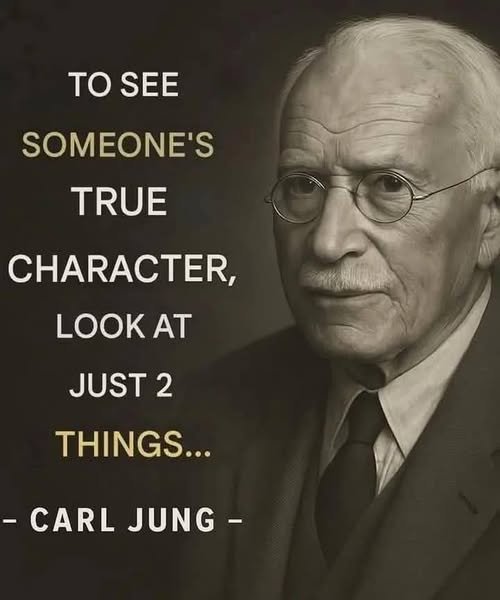
Throughout life, we meet people who initially appear kind, trustworthy, and dependable. Yet over time, we sometimes realize that the image they presented was only part of the story. A person’s true character is often hidden behind polite behavior, friendly smiles, and carefully chosen words. The deeper truth about someone usually reveals itself not in the moments when they are trying to impress others, but in ordinary situations where their guard is down.
Psychologist Carl Jung believed that genuine character appears in everyday actions rather than grand gestures. According to his perspective, people often behave differently when they believe they are being observed or judged. However, when there is no audience and no advantage to gain, their real attitudes and values naturally emerge. These quiet moments can reveal far more about someone than speeches or promises ever could.
Because of this, small interactions often matter more than big, dramatic situations. Anyone can appear patient, generous, or respectful when everything is going well. It is much easier to behave kindly when there is praise, recognition, or personal benefit involved. True character, however, is reflected in subtle choices made when no one is paying attention.
One of the clearest signs of a person’s character is how they treat individuals who have no power or influence over them. Everyday encounters with service workers, strangers, or people performing simple jobs can reveal a great deal about someone’s personality.
A person who treats waiters, cashiers, cleaners, or strangers with respect demonstrates empathy and humility. Their kindness is not selective; it reflects a genuine belief that everyone deserves dignity, regardless of their social position.
In contrast, someone who dismisses, ignores, or disrespects people they consider less important often reveals deeper traits such as arrogance, insecurity, or a lack of compassion. These small moments quietly expose the truth about who someone really is.