A Simple Trick to Tell Real Honey by Flipping the Bottle Upside Down, Why This Viral Method Persists, What It Gets Wrong, and How to Actually Identify Pure Honey Using Science, Labels, and Smarter At-Home Tests

  • News
  • January 29, 2026

Honey has long been valued as a natural food for its flavor, enzymes, antioxidants, and cultural significance. From ancient medicine to modern kitchens, it represents a product created entirely by bees and nature. However, its desirability has made it a frequent target for adulteration, making authenticity important for health, ethics, and environmental responsibility.

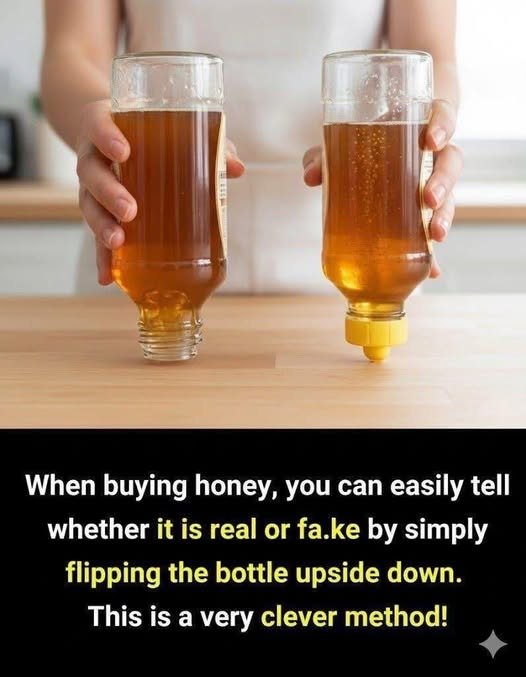
To identify fake honey, many people rely on simple visual tricks found online, especially the upside-down bottle test. This method claims that pure honey flows slowly and forms a single rising bubble, while fake honey pours quickly. Although appealing, this test ignores honey’s natural variability and oversimplifies a complex biological product.

Honey’s viscosity depends on many factors, including temperature, floral source, storage conditions, and processing. Warm honey naturally flows faster, while cooler honey thickens. As a result, pure honey may fail the bottle test, while diluted honey stored in cooler conditions may appear thick and convincing, making the test unreliable.

Processing further complicates the issue. Pasteurized and filtered honey, though authentic, often flows faster than raw honey. Meanwhile, adulterated honey can be engineered to mimic real viscosity using syrups and thickeners. Packaging shape, bottle size, and air content also influence flow and bubble behavior, undermining visual judgments.

More dependable at-home methods include the thumb test, water test, and paper test, each assessing water content and behavior. While none are definitive alone, using several together reduces errors. Even better is informed purchasing—reading labels, avoiding blends, checking certifications, and buying from trusted local beekeepers.

The bottle flip test remains popular because it is simple and satisfying, but authenticity cannot be reduced to a single visual cue. Honey reflects its environment, processing, and stewardship. Respecting its complexity through knowledge and careful sourcing helps protect both consumers and the integrity of this remarkable natural food.


  • Related Posts

    • News
    • March 13, 2026
    • 4 views
    If you have these vertical lines on your nails after 40, it’s a clear sign of… see more 👀👇👇👇

    Sleep positions may seem like mere habits, but they often reflect deeper emotional dynamics—especially for couples. Our body language continues even in sleep, subtly expressing connection, distance, or underlying tension…

    • News
    • March 13, 2026
    • 2 views
    Why Vertical Lines on Your Nails Often Appear With Age

    Noticing thin vertical lines running from the base of your fingernails to the tips can be surprising, especially as they become more visible with age. Many people first notice them…

    Leave a Reply

    Your email address will not be published. Required fields are marked *

    You Missed

    If you have these vertical lines on your nails after 40, it’s a clear sign of… see more 👀👇👇👇

    If you have these vertical lines on your nails after 40, it’s a clear sign of… see more 👀👇👇👇

    Why Vertical Lines on Your Nails Often Appear With Age

    Why Vertical Lines on Your Nails Often Appear With Age

    AMERICA APPLAUDS THE PIMA SHERIFF! The nation is shaken by the latest announcement in the Nancy Guthrie case

    AMERICA APPLAUDS THE PIMA SHERIFF! The nation is shaken by the latest announcement in the Nancy Guthrie case

    Father who murdered 10-year-old daughter is attacked in prison

    Father who murdered 10-year-old daughter is attacked in prison

    Never lend these 8 things to anyone, or you will attract poverty and curses.

    Never lend these 8 things to anyone, or you will attract poverty and curses.

    The Hidden Risks of Falling in Love After 60: Why Late-Life Romance Can Bring Unexpected Emotional, Financial, and Family Challenges That Many People Never See Coming, Leaving Seniors Navigating Passion, Trust, and Vulnerability While Balancing Independence, Past Experiences, and the Hope That Love Later in Life Can Still Be Worth Every Risk Taken

    The Hidden Risks of Falling in Love After 60: Why Late-Life Romance Can Bring Unexpected Emotional, Financial, and Family Challenges That Many People Never See Coming, Leaving Seniors Navigating Passion, Trust, and Vulnerability While Balancing Independence, Past Experiences, and the Hope That Love Later in Life Can Still Be Worth Every Risk Taken