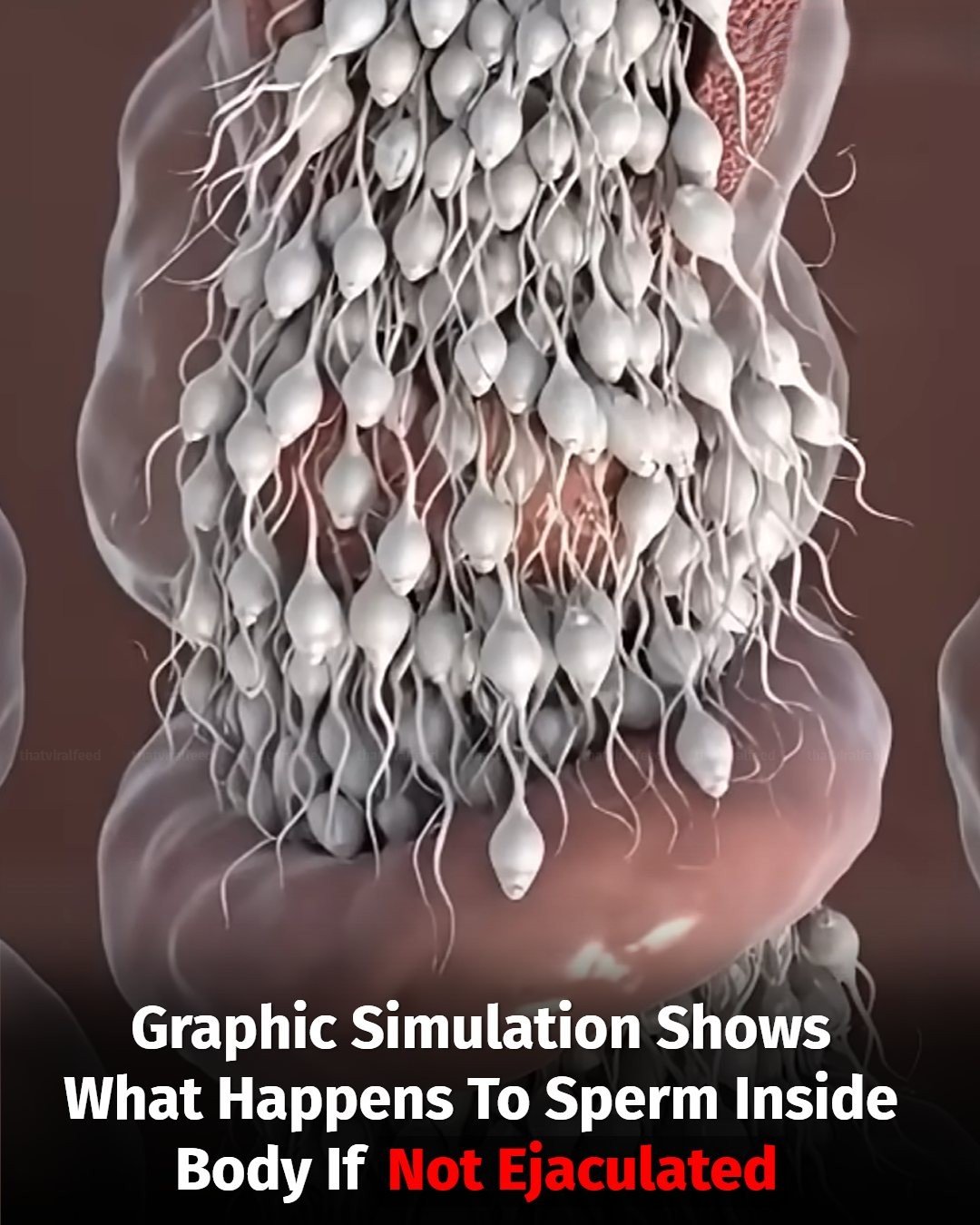
A simulation has explained what happens to sperm inside the male body if it is never ejaculated.
A graphic simulation has shown what actually happens to sperm inside a man’s body when it is not released through ejaculation.
Many people assume sperm simply builds up inside the body, but the biological process is more complex than that.
Men begin producing sperm soon after they enter their early teenage years, and the body continues producing it for the rest of their lives.
In fact, the testicles create millions of sperm cells every single day as part of a continuous reproductive cycle.
According to Clear Blue, sperm production begins inside the testicles within a network of tiny tubes known as seminiferous tubules.
These tubes contain germ cells, which are the early-stage cells that eventually develop into sperm.
Under the influence of hormones such as testosterone, those germ cells begin to transform into sperm cells.
During this development process the cells divide and slowly form the familiar “tadpole” shape that most people recognize when thinking about sperm.
The entire development process from a germ cell to a fully mature sperm cell that can fertilize an egg usually takes around two and a half months.
Although that sounds like a long time, the male reproductive system works continuously, meaning the body constantly produces new sperm.
Because of this steady production, a healthy male will not run out of sperm even if ejaculation happens multiple times in one day.
Once sperm are created, they travel from the seminiferous tubules to another structure called the epididymis.
This long coiled tube sits behind the testicles and plays an important role in storing and maturing sperm.
During this stage the sperm gain the ability to swim and become capable of fertilizing an egg.

A simulation shows what happens to the sperm in a man’s body if it’s not ejaculated within a certain amount of time.